
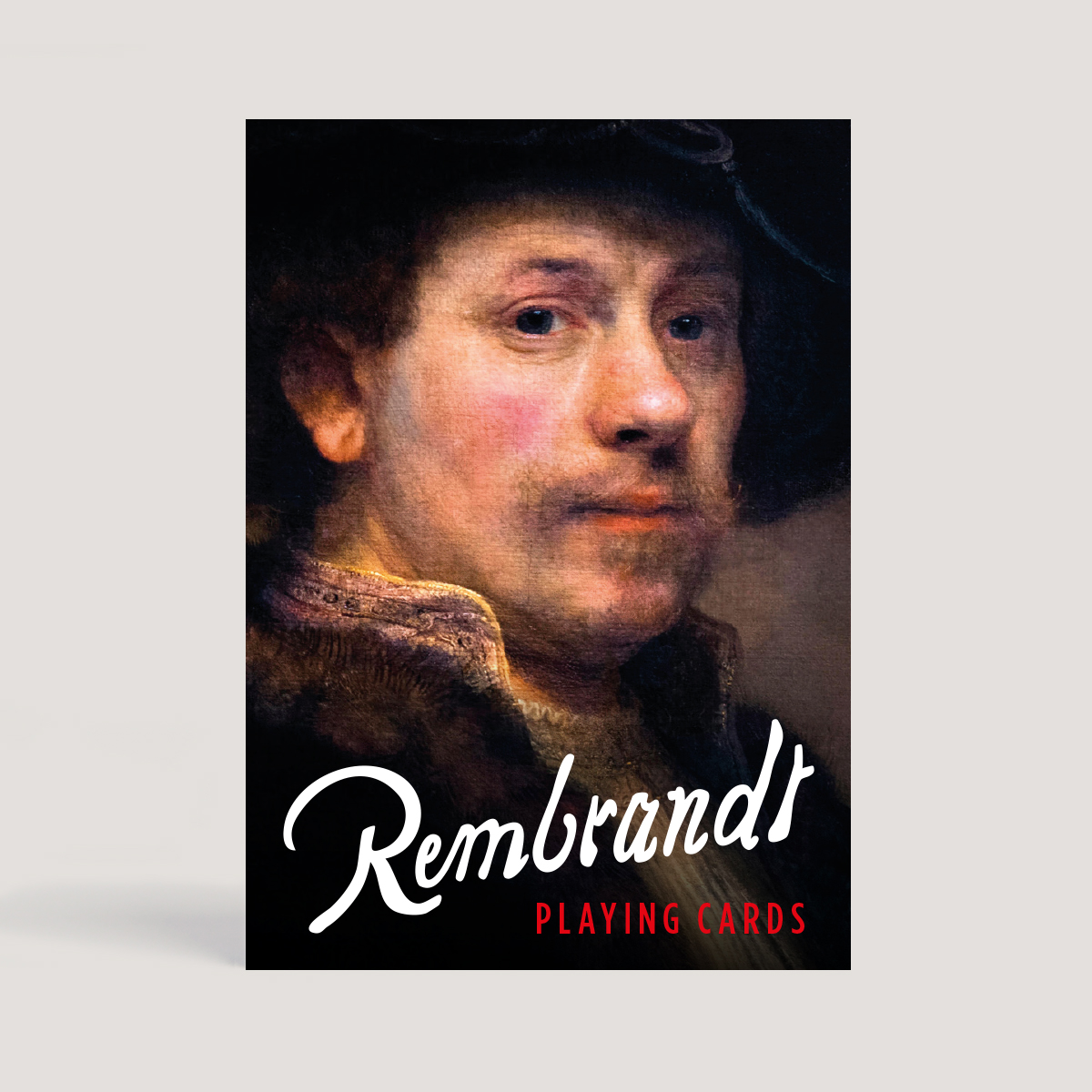
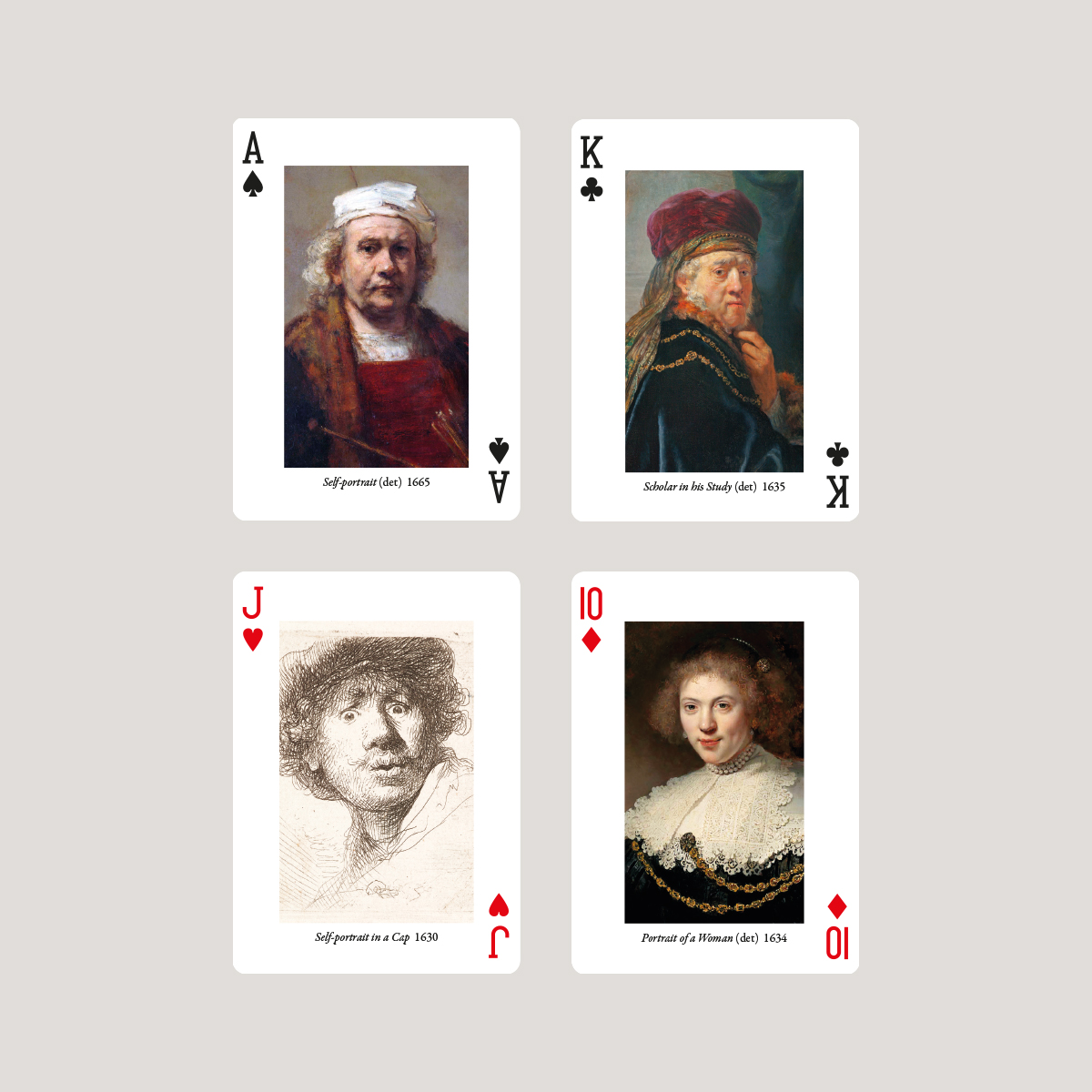
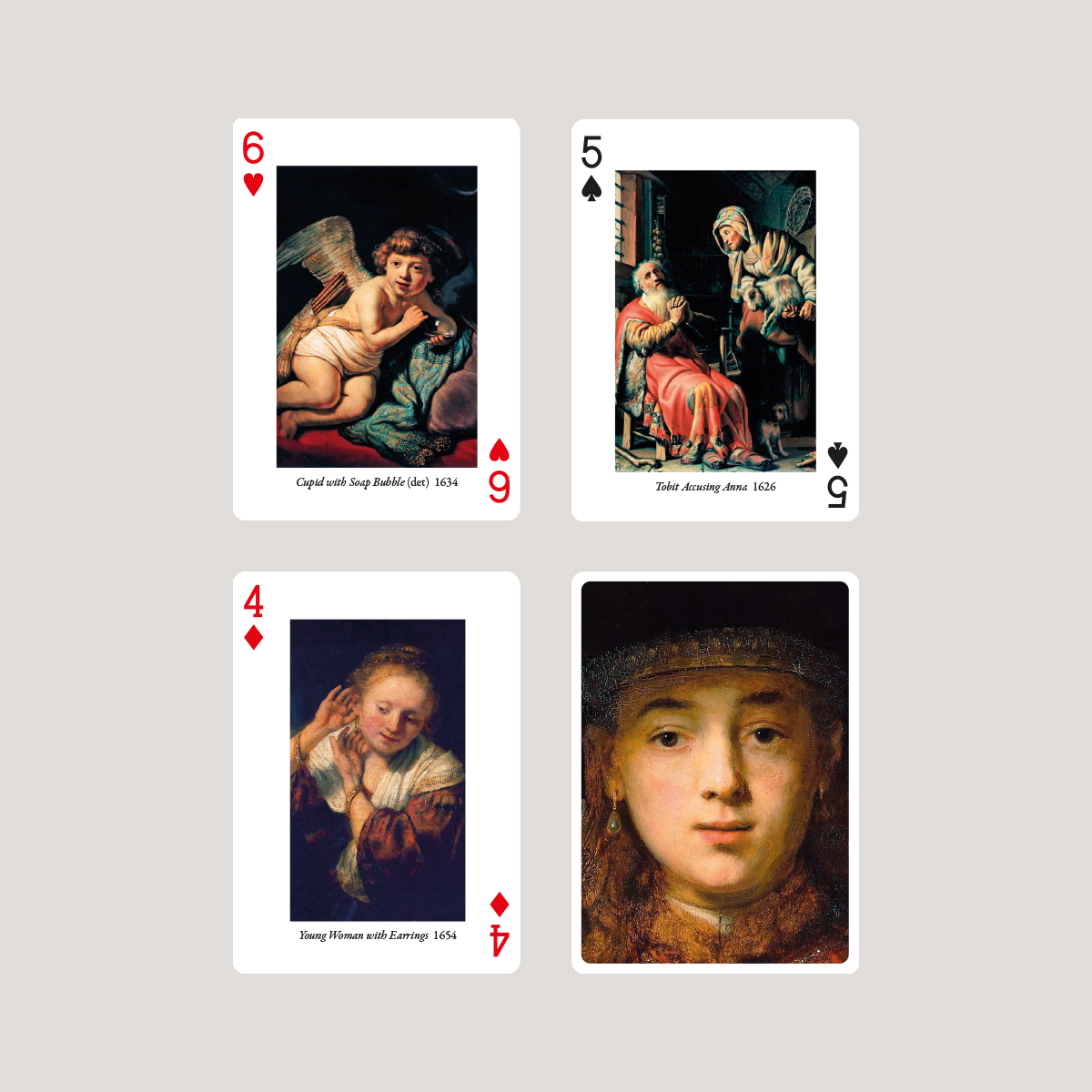
Rembrandt Harmenszoon van Rijn (1606–1669) was born in Leiden, the ninth child of a miller. After a brief period at the University of Leiden, he turned to painting and quickly established himself in Amsterdam as one of the leading artists of the Dutch Golden Age. He was celebrated for his history paintings and biblical scenes, and above all for his extraordinary ability to capture psychological depth through light, shadow, and gesture.
His early work is precise and highly finished, while his later paintings become looser, more expressive, and increasingly focused on mood rather than detail. Nowhere is this transformation clearer than in his self-portraits—nearly 100 works that chart the passage of time with unflinching honesty. As Kenneth Clark observed, Rembrandt turned self-portraiture into autobiography itself.
Etching and drawing reveal another dimension of his genius. Stripped of colour and surface grandeur, they expose his intellectual clarity and compositional control. As Eugène Fromentin noted, “The whole of Rembrandt is in his etchings.”
Financial misfortune, personal loss, and shifting taste gradually undermined his status, yet he never abandoned his artistic principles. In doing so, he produced some of the most profound and human images in Western art.
These playing cards bring together Rembrandt’s portraits, etchings, and studies of light and character into a tactile collectible form, where each card reflects his mastery of observation and atmosphere.
If you are interested in starting or building a collection, you can find more about Bird Playing Cards on our art playing cards page.
For deeper insight into Rembrandt’s life, technique and the artistic movements that shaped his work, visit our blog, where we explore the history and ideas behind each series.
Build your collection of Grand Masters with Michelangelo, Leonardo da Vinci, Raphael, and Velázquez, each representing a defining force in the history of Western art.