
ANYTHING GOES A brief history of the musical
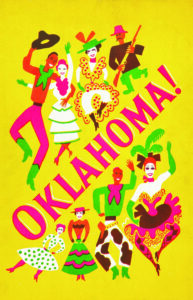 ‘No legs, no jokes, no chance!’ The famous quote was plain wrong. The show in question – the 1943 pre-Broadway premiere of Away We Go – was a strange subject for an entertainment: a story about feuding cattlemen and farmers out West in 1906, that includes a gruesome killing. Such violence was not the stuff of the usual froth (London’s theatreland was once called ‘an asylum for American inanity’). When it opened in New York the name had changed to Oklahoma! And it broke all records. The lyricist was Oscar Hammerstein II, a man who changed musical history, not just for his writing but because he inspired his young neighbour, Stephen Sondheim, the other key man in the history of the musical. Oklahoma! was Oscar’s first collaboration with composer Richard Rodgers. Hammerstein, with Jerome Kern as composer, had written the book and lyrics for the landmark Show Boat (1927) – with its theme of racism – where ‘the play was the thing [and] song, humour and production numbers were subservient.’
The musical form had descended from operettas, from comic opera, from Offenbach and Strauss, from Gilbert & Sullivan; and from pantomime and music hall, with their revue structure. What Show Boat did was marry spectacle with seriousness. A new genre was born, the musical play. Oklahoma! took things further. Music, comedy, drama and dance are integrated. And, crucially, songs and dance advance the plot and reveal character. Irving Berlin and Cole Porter, giants of the musical stage, saw the future: Berlin’s Annie Get Your Gun (1946) and Porter’s Kiss Me Kate (1947) adapted to the integrated musical. Lerner and Loewe could not have created My Fair Lady (1956) without Oklahoma! But their musical (adapted from Shaw’s Pygmalion) had, remarkably, no love story or subplot or triumphant chorus. 
Oklahoma! has an opening song with the line – ‘The corn is as high as a elephant’s eye…’ Weird but memorable; it showed that lyrics can transcend the banal. Stephen Sondheim’s lyrics for West Side Story (1957) – based on Romeo and Juliet – fit Leonard Bernstein’s classical/jazz score perfectly. [In 1935, George Gershwin had fused jazz and classical elements in the operatic Porgy and Bess.] Bernstein remembered the difficulties – ‘who wanted to see a show in which the first-act curtain comes down on two dead bodies lying on the stage?’ More gruesome fare was to come. Sondheim’s Sweeney Todd (1979) is a gory tale of murder and cannibalism. In 1968 the maverick Hair was a counter-culture ‘happening’, an alternative musical perhaps but it had a (sort of) plot about a Vietnam draft dodger. What Sondheim pioneered was the plotless musical, Company (1970), for which he wrote both music and words. He found a new way of telling the story – by abandoning the very notion of story. Company doesn’t have a traditional plot, it has a conceit: songs exist only as comment. Sondheim’s ‘concept musical’ – developed in his Follies (1971) and A Little Night Music (1973) – culminates in Sunday in the Park with George (1984) about the painter Seurat, with (appropriately) a pointillistic score, unhummable music, spurning the traditional catchy tune.
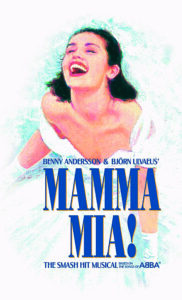 The 1980s brought a new phenomenon. The British hits Les Misérables (1980), Cats (1981), Phantom of the Opera (1986) – the longest-running show in Broadway history, produced by the legendary Hal Prince – and Miss Saigon (1989) emphasised special effects, spectacle; but above all marketing. Cameron Mackintosh became ‘the most successful, influential and powerful theatrical producer in the world’ (NYT). By the 1990s, mega-musicals were so expensive to stage they needed the backing of billion-dollar corporations to succeed – like Disney’s Lion King (1997) and Livent’s Ragtime (1996). Producers look for safety. One solution is the ‘jukebox musical’, using existing pop songs, like ABBA’s Mamma Mia! (1999). Another way to reduce risk is to rehash favourite movies for the stage like Kinky Boots (2012) and La Cage aux Folles (1983), which are both about a drag queen. Bonnie & Clyde (2009) is about two homicidal bank robbers (and was performed recently on ice by a Japanese all-woman troupe). There are no taboos. Hitler? No, The Producers (2001) did him. The last seven days of Jesus’s life on earth as seen by Judas Iscariot was the risky subject of Lloyd Webber and Rice’s Jesus Christ Superstar (1971). [Oklahoma! was the first musical to have a cast album but Superstar was the first that made the album before the show.] The same duo’s Evita (1978) – which, uniquely, had no dialogue between songs – was slated as a ‘fascist play’, ‘an odious artefact’. Doomed. But Hal Prince, its producer, said: ‘Any opera that begins with a funeral can’t be all bad.’ 70 million people who’ve seen Evita would agree. By the way, if you’re wondering which comes first, words or music, the lyricist Ira Gershwin had the answer. ‘The contract.’
The musical has continued to evolve in the 21st century, embracing new sounds, stories, and audiences. Productions like Hamilton have shown how contemporary music styles can reshape historical storytelling, bringing fresh energy to the genre and attracting a new generation of theatre-goers.
At the same time, musical theatre has become a global phenomenon. From the West End to international stages, productions are adapted, translated, and reimagined for audiences worldwide, proving the universal appeal of storytelling through song.
Technology has also played a role in expanding the reach of musicals. Streaming, social media, and filmed performances have made theatre more accessible than ever, allowing shows to reach far beyond the limits of physical stages.
Yet the essence of the musical remains unchanged: a unique blend of music, drama, and movement that brings stories vividly to life. As the genre continues to adapt and innovate, its enduring appeal suggests that the musical will remain a central part of popular culture for years to come.
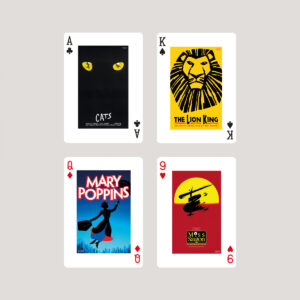
Bring the magic of the stage to your collection with the Musicals deck from Bird Playing Cards, celebrating iconic shows and timeless performances

gqmjks