
WHAT SORT OF MAN WAS HOLMES?
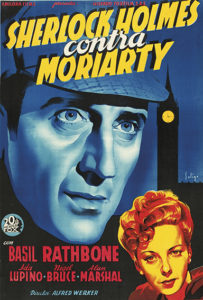 SHERLOCK HOLMES (b. 1854), a consulting detective, first appeared in A Study in Scarlet (1887), for which its author received £25. Holmes’s fame spread through short stories in The Strand Magazine, beginning with A Scandal in Bohemia in 1891. The oeuvre continued until 1927, spanning four books and 56 short stories, most narrated by Holmes’s friend and biographer Dr John H Watson, who shared lodgings with him at 221B Baker Street in London, where many of the stories begin. They were tended by the long-suffering housekeeper Mrs Hudson.
Holmes’s creator, Arthur Conan Doyle (1859-1930), an unsuccessful doctor, based Holmes partly on Edgar Allan Poe’s detective, Dupin, and partly on Joseph Bell, an Edinburgh forensic pathologist whom Conan Doyle had worked for as a clerk. Bell, however, wrote to the author – ‘You are yourself Sherlock Holmes and well you know it.’
HOLMES’S HABITS
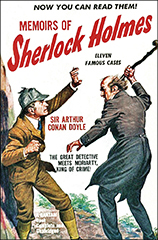 Was Holmes easy to live with? Watson (a former army surgeon wounded in Afghanistan) refers to Holmes’s ‘incredible untidiness, his addiction to music at strange hours, his occasional revolver practice within doors, his weird and often malodorous scientific experiments [which] made him the very worst tenant in London’ (His Last Bow, 1917). The mirthless image of Holmes was fixed by his illustrator Sidney Paget (1860-1908); in fact, Watson records Holmes laughing 65 times (and smiling 103 times). The Strand wanted Paget’s brother Walter but addressed the envelope to ‘Mr. Paget’ and Sidney opened it. He used his handsome brother as a model, a far cry from Doyle’s gaunt beaky original. Watson found Holmes’s ‘scraping at the fiddle’ irksome but he was actually a fine violinist, who loved Paganini. He smoked. Cigars, cigarettes and pipes, but never the curved calabash – that was an invention of the American actor-manager William Gillette to make his face more visible on stage. Holmes was moody. He bit his nails. He also had a cocaine habit. ‘Holmes, who loathed every form of society with his whole Bohemian soul [alternated] from week to week between cocaine and ambition, the drowsiness of the drug, and the fierce energy of his own keen nature’ (A Scandal in Bohemia). Above all, ‘his life was spent in one long effort to escape from the commonplaces of existence.’ He wore a ‘long grey travelling-cloak and his ear-flapped travelling cap’ (which Paget interpreted as a deer stalker). In private he wore a dressing gown. He was careless of his health – ‘I am a brain, Watson. The rest of me is a mere appendix.’ A polymath, he was the master of many subjects, from miracle plays to medieval pottery. He was a proficient fencer.
HOLMES AND WOMEN
‘Holmes had an aversion to women,’ wrote Watson. ‘All emotions, and [love] particularly, were abhorrent to his cold, precise but admirably balanced mind.’ Yet he had ‘when he liked, a peculiarly ingratiating way with women.’ In The Sign of Four (1890) Holmes said: ‘I should never marry myself, lest I bias my judgment.’ And anyway – ‘Women are never to be entirely trusted – not the best of them.’
Holmes’s fame It rests on his supreme deductive powers, his cryptanalysis and his mastery of disguise, be it drunken groom or venerable Italian priest. His method was ‘founded upon the observance of trifles’ (The Boscombe Valley Mystery, 1891). ‘You see, but you do not observe,’ he tells Watson (A Scandal in Bohemia). ‘When you have eliminated the impossible, whatever remains, however improbable, must be the truth’ (The Sign of Four). Without facts, he could presume nothing or imagine nothing: ‘Data! data! data! I can’t make bricks without clay’ (The Adventure of the Copper Beeches, 1892).
DEATH
In The Final Problem (1893) Conan Doyle, ‘overdosed’ on Holmes and eager to pursue ‘serious’ writing, killed him off (to the publisher’s horror, The Strand Magazine lost 20,000 readers) when Holmes and Moriarty, his arch enemy (‘the Napoleon of crime’), fell from the Reichenbach Falls. But in The Adventure of the Empty House (1903) Holmes reappears. He faked his death to fool his enemies. Holmes retired in 1902 to a farm on the South Downs in Sussex where he kept bees, studied philosophy and suffered from rheumatism. He has never died. He lives on in films and TV, the most portrayed fictional character ever, with over 25,000 stage adaptations. In WW2 Hollywood ‘weaponised’ him as a propaganda tool. He never said ‘Elementary, my dear Watson’ – a line from PG Wodehouse’s Psmith, Journalist (1915). But the reason for his fame is elementary. He was, said Watson, ‘the most perfect reasoning and observing machine that the world has seen’.
The US president raged at NATO allies over defense spending in meeting with the German chancellor, as Israel ordered its military to ‘advance’ in Lebanon
I really like reading a post that will make people think.
Also, thanks for allowing for me to comment!
Selamlar arkadaşlar,
Piyasada bedava bonus dağıtan platformlar konusunda çok fazla bilgi kirliliği var. Pek çok platform bonus veriyor gibi görünse de çekim kuralları yüzünden kullanıcıları yoruyor.
İşte tam bu noktada sektörü takip eden biri olarak harika bir adresi gözüme çarptı. Sektörde güven veren **Ecel Dayı**, güncel ve çevrimi kolay bedava bahis fırsatlarını titizlikle süzerek listeliyor.
Bu listenin farkı ne diye sorarsanız:
]Yalnızca lisanslı ve güvenilir sitelere yer veriliyor.
]Bonusların gizli kuralları açıkça belirtilmiş.
]Hızlıca güncellenen bir liste sunuluyor.
Siz de zaman kaybetmeden en güncel bedava bonusları yakalamak istiyorsanız, kesinlikle Ecel Dayı’nın güncel listesine göz atmanızı öneririm.
Güncel listeye buradan ulaşabilirsiniz:
Umarım herkes için faydalı bir paylaşım olur. Bol kazançlar dilerim!
необходимость дополнительного ПО или управления;
The chemo dripped into your veins like liquid fire,
and I held your hand as it burned you from within,
watching your hair fall out in clumps onto the pillow,
a sacrifice to a god of mercy who never came.
Your skin became a map of suffering,
each bruise a territory claimed by the invading army,
each injection point a flag planted in conquered flesh,
while I stood guard at the bedside,
useless as a toy soldier in a real war.
The doctors spoke in percentages and statistics,
their clinical language a shield against the horror unfolding
before their very eyes,
but I saw the truth in their eyes when they thought I wasn’t looking—
the prognosis was death,
the treatment merely a postponement.
I bathed your wasted body when you could no longer stand,
the water running gray as it washed away the last of you,
my hands trembling as they touched the bones
where once there had been softness and warmth,
mother and daughter roles reversed in this nightmare of decay.
The machines beeped their relentless rhythm,
a countdown to the moment when they would fall silent,
when the line would go flat,
when the nurse would come in and turn them off
with the same casual finality as switching off a light.
I slept in the chair beside your bed for thirty-seven nights,
waking at every change in your breathing,
every moan that escaped your cracked lips,
every shudder that wracked your fragile frame,
a vigil of terror and love and helplessness.
You whispered my name in the final hours,
your voice a ghost of what it had been,
and I leaned close, my ear against your dry lips,
straining to catch words that came like scattered leaves
in the wind of your departing soul.
“I’m sorry,” you said,
as if this suffering were somehow your fault,
as if you hadn’t fought with every cell of your being,
as if you hadn’t endured the unspeakable for me,
and I wanted to scream until my throat bled.
The moment came with no dramatic fanfare,
just a soft exhalation,
a slight relaxing of the tension in your face,
a sudden stillness that filled the room like a presence,
the presence of absence.
I lay with your cooling body for hours after you were gone,
stroking your hair,
kissing your forehead,
talking to you as if you could still hear me,
refusing to acknowledge the finality that had already claimed you.
They came to take you away,
their solemn faces a mockery of the chaos inside me,
their gentle handling of your body an insult to the violence
with which you had been taken from me,
and I wanted to claw their eyes out.
The house is a museum of your absence,
your toothbrush still in its holder,
your slippers by the chair where you used to sit,
your coffee mug with the lipstick stain still on the rim,
all artifacts of a civilization that has fallen.
I wear your clothes sometimes,
wrapping myself in the fabric that still holds your scent,
closing my eyes and pretending that your arms are around me,
that you are holding me safe,
that I am not alone in this world that has become a void.
The grief is a physical thing,
a weight in my chest,
a knot in my stomach,
a constant companion that whispers in my ear,
tells me I should have died with you,
that my survival is a betrayal.
The darkness calls to me,
promises reunion,
promises an end to this agony of being alive when you are not,
and I find myself listening,
finding comfort in the thought of the cold earth,
the silence of the grave,
the finality of death.
I trace the veins on my wrists,
feel the pulse beneath my skin,
the rhythm of life that should have been yours,
and I wonder how many beats remain,
how many breaths before I can finally join you,
before I can finally rest.
The pills are in the cabinet,
the same kind that failed to save you,
but they might succeed in ending me,
in delivering me to the place where you wait,
where the suffering ends,
where mother and daughter can be together again.
I think of you often,
of your smile,
of your laugh,
of the way you said my name,
and the memories are both comfort and torture,
a reminder of what I’ve lost,
of what I can never have again.
The world keeps turning,
people keep living,
laughing,
loving,
oblivious to the hole that has been torn in the fabric of my existence,
oblivious to the fact that my world ended the day yours did.
Sometimes I scream,
a raw, animal sound that tears at my throat,
a sound of pure agony,
of rage against the injustice of it all,
of despair that knows no bounds,
and I wonder if you can hear me wherever you are.
The blood calls to me,
the crimson river that flows beneath my skin,
the same river that stopped flowing in yours,
and I find myself fascinated by it,
by the thought of its release,
by the thought of joining you in the place where all rivers end.
I stand at the edge,
the precipice of oblivion,
the wind whipping my hair around my face,
the ground far below,
a final embrace,
a final reunion,
a final peace.
And I know,
with a certainty that terrifies and comforts me,
that I will step off,
that I will fall,
that I will join you,
that we will be together again,
in death,
as we were always meant to be.
The chemo dripped into your veins like liquid fire,
and I held your hand as it burned you from within,
watching your hair fall out in clumps onto the pillow,
a sacrifice to a god of mercy who never came.
Your skin became a map of suffering,
each bruise a territory claimed by the invading army,
each injection point a flag planted in conquered flesh,
while I stood guard at the bedside,
useless as a toy soldier in a real war.
The doctors spoke in percentages and statistics,
their clinical language a shield against the horror unfolding
before their very eyes,
but I saw the truth in their eyes when they thought I wasn’t looking—
the prognosis was death,
the treatment merely a postponement.
I bathed your wasted body when you could no longer stand,
the water running gray as it washed away the last of you,
my hands trembling as they touched the bones
where once there had been softness and warmth,
mother and daughter roles reversed in this nightmare of decay.
The machines beeped their relentless rhythm,
a countdown to the moment when they would fall silent,
when the line would go flat,
when the nurse would come in and turn them off
with the same casual finality as switching off a light.
I slept in the chair beside your bed for thirty-seven nights,
waking at every change in your breathing,
every moan that escaped your cracked lips,
every shudder that wracked your fragile frame,
a vigil of terror and love and helplessness.
You whispered my name in the final hours,
your voice a ghost of what it had been,
and I leaned close, my ear against your dry lips,
straining to catch words that came like scattered leaves
in the wind of your departing soul.
“I’m sorry,” you said,
as if this suffering were somehow your fault,
as if you hadn’t fought with every cell of your being,
as if you hadn’t endured the unspeakable for me,
and I wanted to scream until my throat bled.
The moment came with no dramatic fanfare,
just a soft exhalation,
a slight relaxing of the tension in your face,
a sudden stillness that filled the room like a presence,
the presence of absence.
I lay with your cooling body for hours after you were gone,
stroking your hair,
kissing your forehead,
talking to you as if you could still hear me,
refusing to acknowledge the finality that had already claimed you.
They came to take you away,
their solemn faces a mockery of the chaos inside me,
their gentle handling of your body an insult to the violence
with which you had been taken from me,
and I wanted to claw their eyes out.
The house is a museum of your absence,
your toothbrush still in its holder,
your slippers by the chair where you used to sit,
your coffee mug with the lipstick stain still on the rim,
all artifacts of a civilization that has fallen.
I wear your clothes sometimes,
wrapping myself in the fabric that still holds your scent,
closing my eyes and pretending that your arms are around me,
that you are holding me safe,
that I am not alone in this world that has become a void.
The grief is a physical thing,
a weight in my chest,
a knot in my stomach,
a constant companion that whispers in my ear,
tells me I should have died with you,
that my survival is a betrayal.
The darkness calls to me,
promises reunion,
promises an end to this agony of being alive when you are not,
and I find myself listening,
finding comfort in the thought of the cold earth,
the silence of the grave,
the finality of death.
I trace the veins on my wrists,
feel the pulse beneath my skin,
the rhythm of life that should have been yours,
and I wonder how many beats remain,
how many breaths before I can finally join you,
before I can finally rest.
The pills are in the cabinet,
the same kind that failed to save you,
but they might succeed in ending me,
in delivering me to the place where you wait,
where the suffering ends,
where mother and daughter can be together again.
I think of you often,
of your smile,
of your laugh,
of the way you said my name,
and the memories are both comfort and torture,
a reminder of what I’ve lost,
of what I can never have again.
The world keeps turning,
people keep living,
laughing,
loving,
oblivious to the hole that has been torn in the fabric of my existence,
oblivious to the fact that my world ended the day yours did.
Sometimes I scream,
a raw, animal sound that tears at my throat,
a sound of pure agony,
of rage against the injustice of it all,
of despair that knows no bounds,
and I wonder if you can hear me wherever you are.
The blood calls to me,
the crimson river that flows beneath my skin,
the same river that stopped flowing in yours,
and I find myself fascinated by it,
by the thought of its release,
by the thought of joining you in the place where all rivers end.
I stand at the edge,
the precipice of oblivion,
the wind whipping my hair around my face,
the ground far below,
a final embrace,
a final reunion,
a final peace.
And I know,
with a certainty that terrifies and comforts me,
that I will step off,
that I will fall,
that I will join you,
that we will be together again,
in death,
as we were always meant to be.